Quality standards
Before you trust a number about your kidneys, you should know where it comes from. Here is exactly what is in the bottle — and what it can and cannot do.
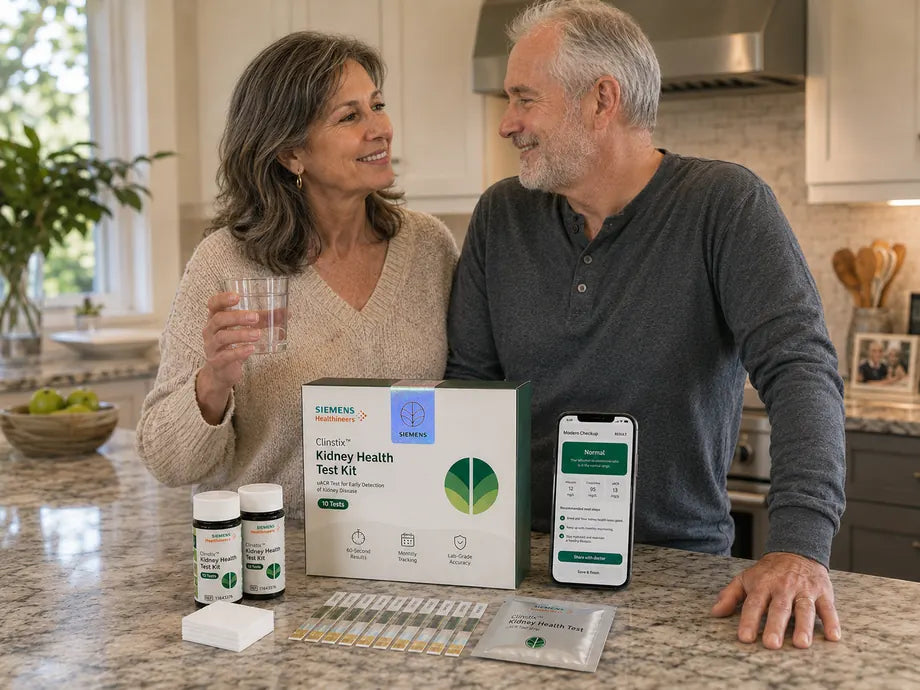
The same test pads your doctor’s lab uses
This is not a consumer imitation of a lab test. The strip in your kit carries the same test pads Siemens makes for the machines in hospital and clinical labs. Same chemistry, same thresholds — read at your kitchen sink instead of across town.
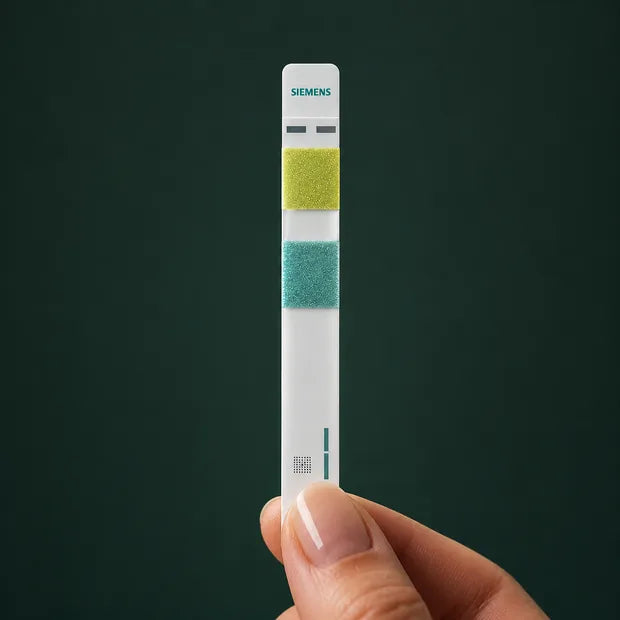
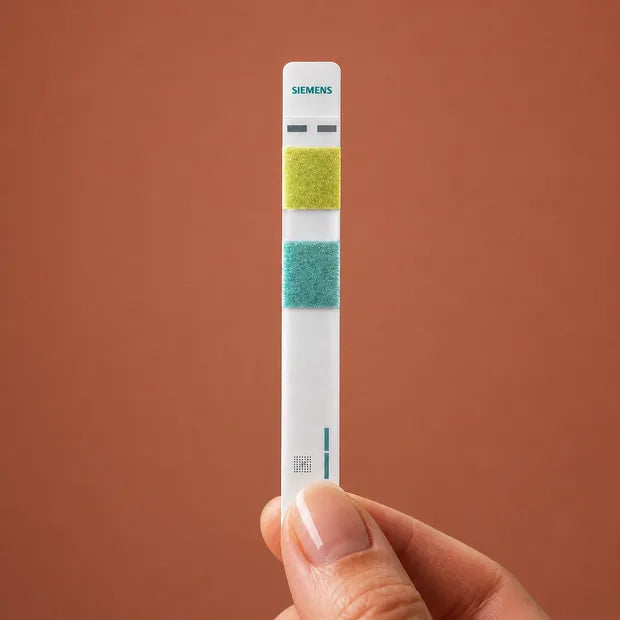
“[Our] test strips have the same test pads as are on the test strips used by doctors and clinical labs.”
Three numbers worth knowing
In Siemens’ evaluation studies, untrained people testing at home reached the same albumin-to-creatinine result as healthcare workers 84% of the time.
The lowest albumin level the strip picks up — low enough to catch kidney damage at its earliest measurable stage.
The clearance number for this exact test. It is public record. Look it up before you buy.
Why we measure two things, not one
Albumin on its own can mislead you. Drink a lot of water and a real problem can read as normal. Test after hard exercise and a healthy kidney can read as alarming.
Measuring creatinine alongside it corrects for how concentrated your sample is. That is why the American Diabetes Association, the National Kidney Foundation and KDIGO all recommend the ratio over albumin alone — fewer false alarms, fewer missed cases. It also means no 24-hour urine collection.
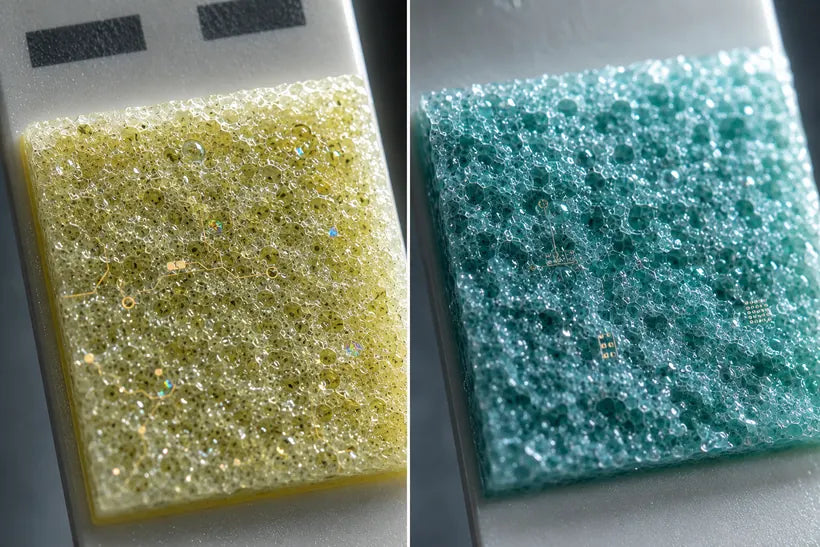
What can throw a result off
No test is perfect, and you deserve to know the edges of this one before you use it.
A urinary tract infection, a fever, or hard exercise can temporarily raise albumin. Mention it to your doctor if any applied.
Cimetidine (Tagamet) can push the creatinine reading falsely high.
Do not use the test if your urine is visibly bloody.
Most foods, alcohol and medications do not interfere — but a few can tint your urine and make the pads harder to read.
One abnormal result on its own may mean nothing. That is why we test every month and watch the trend.
Keeping them accurate at home
Four rules. Follow them and the strip performs the way it did in the lab.
Manufactured by Siemens Healthcare Diagnostics Inc., Tarrytown, New York. For in vitro diagnostic use.
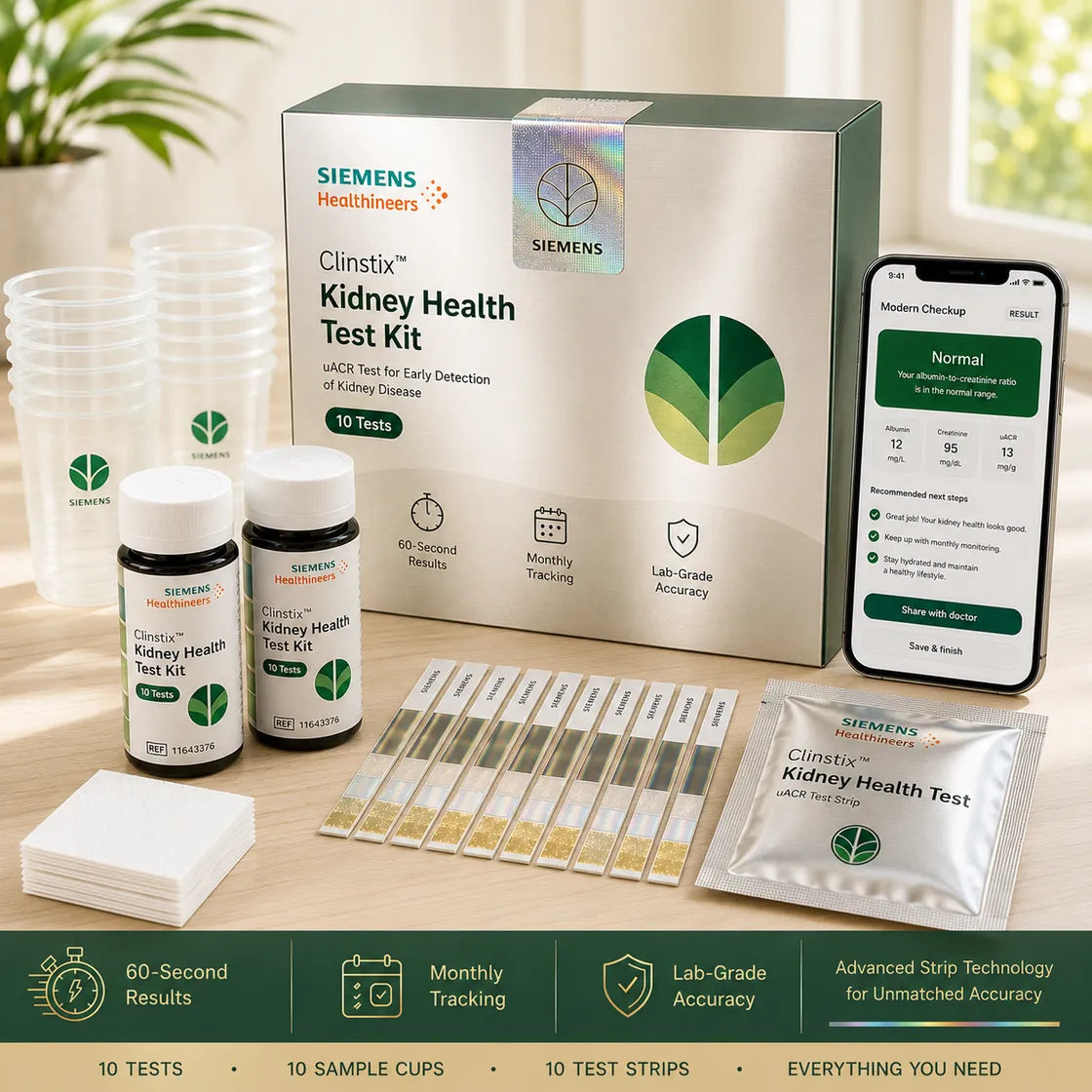
Lab-grade chemistry. Your bathroom.
One minute a month, and you will know if anything is changing.
Start Monitoring for $49/moTry it risk free for 30 days